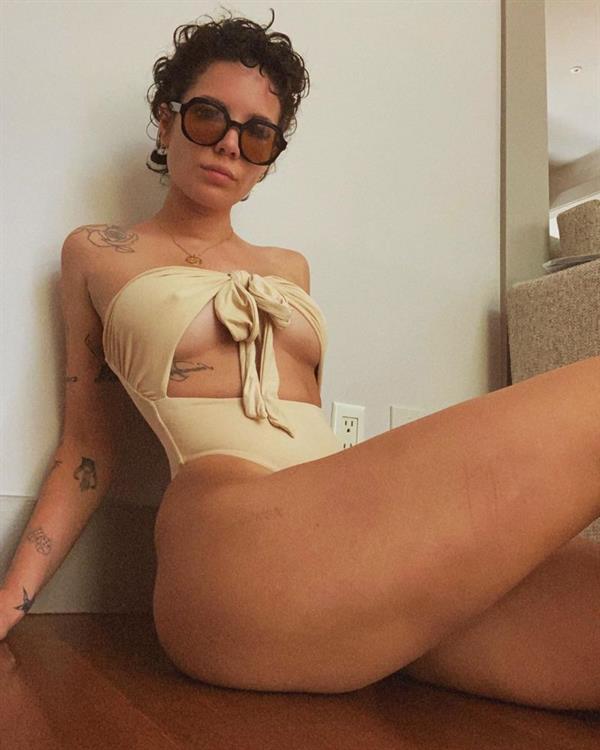
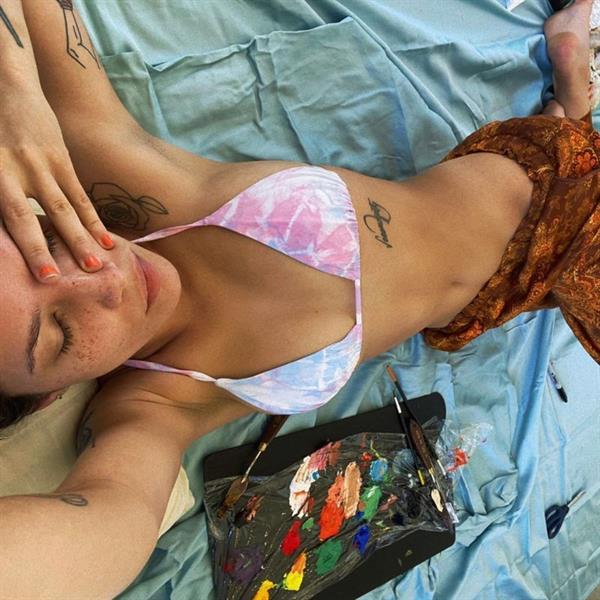
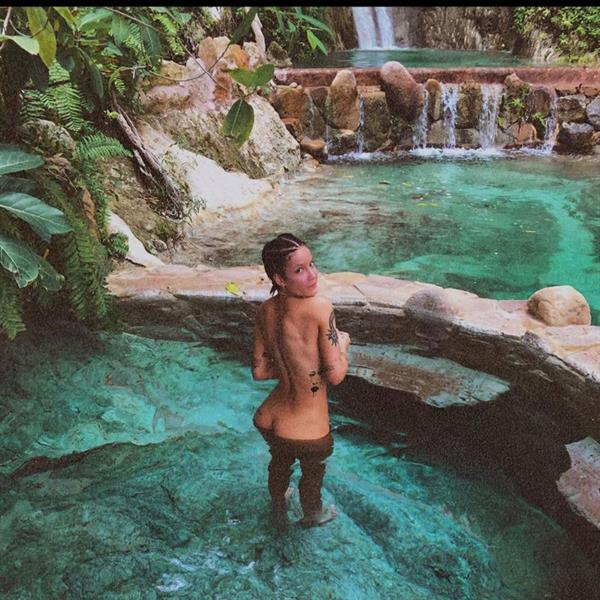
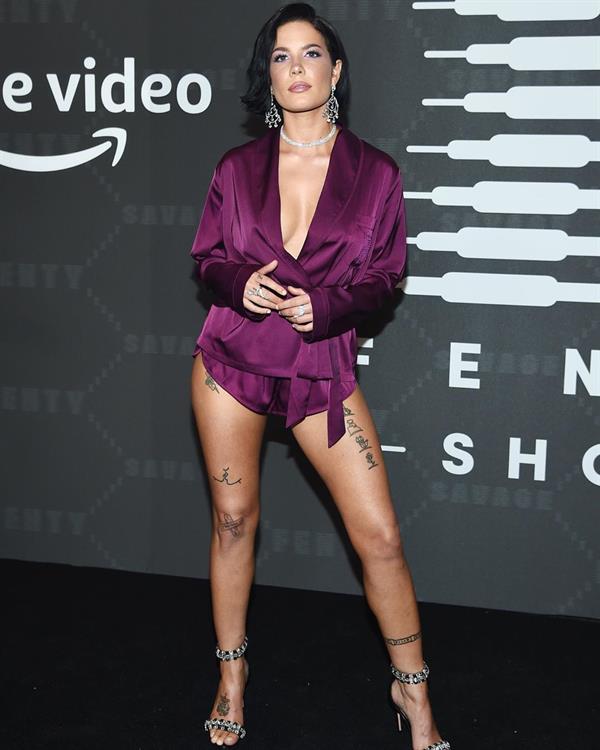
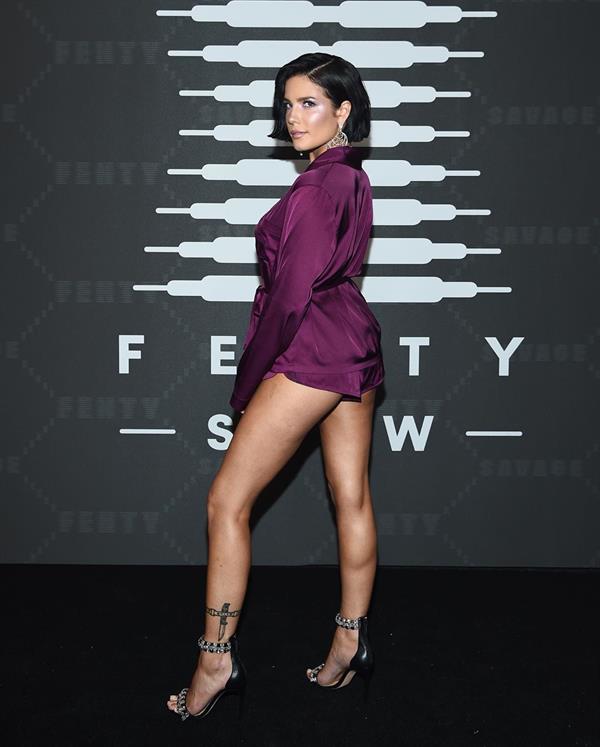
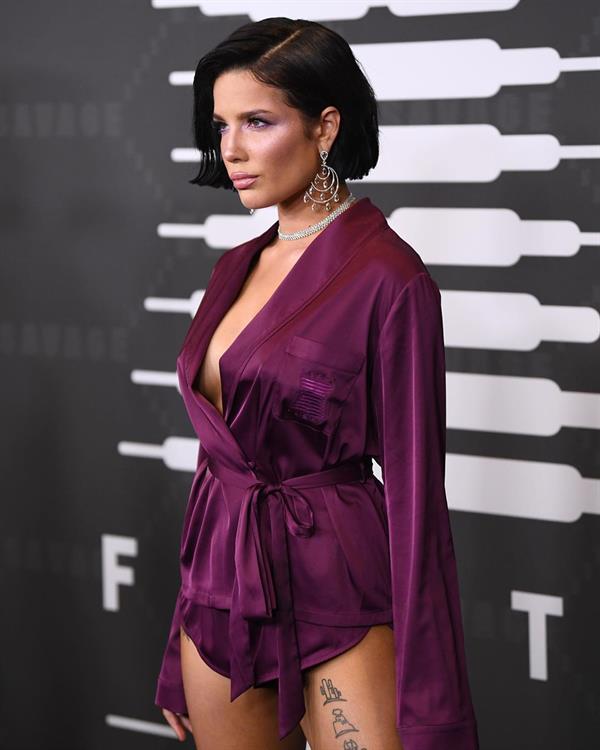
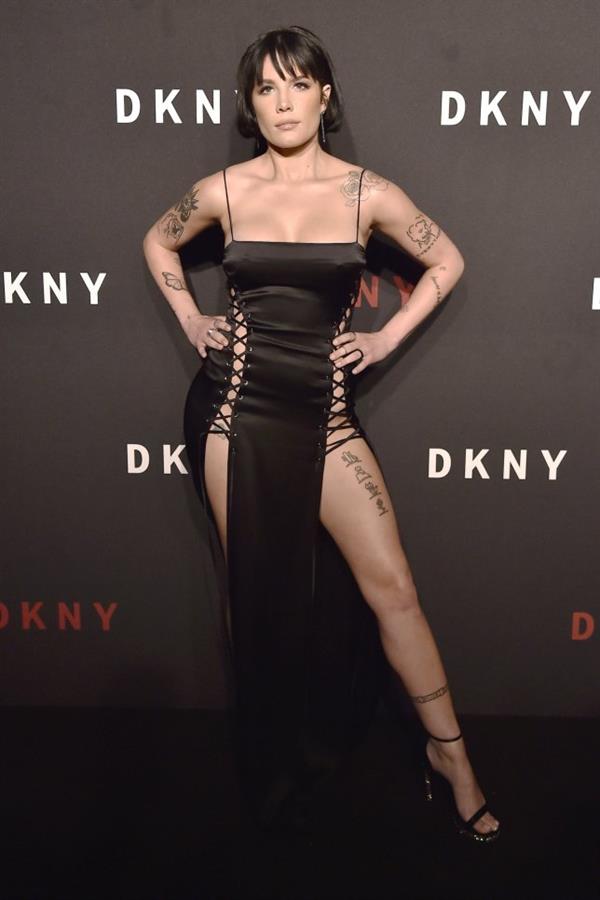
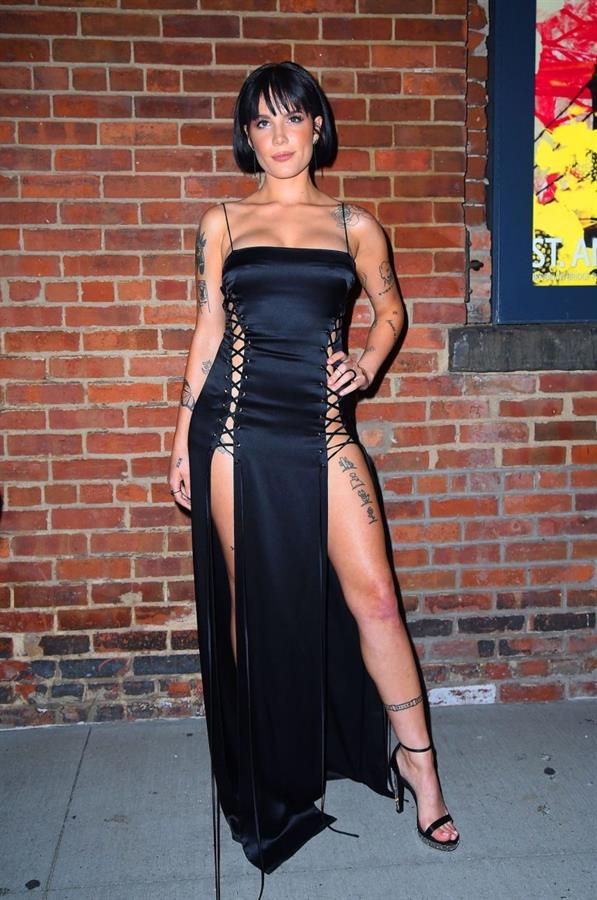
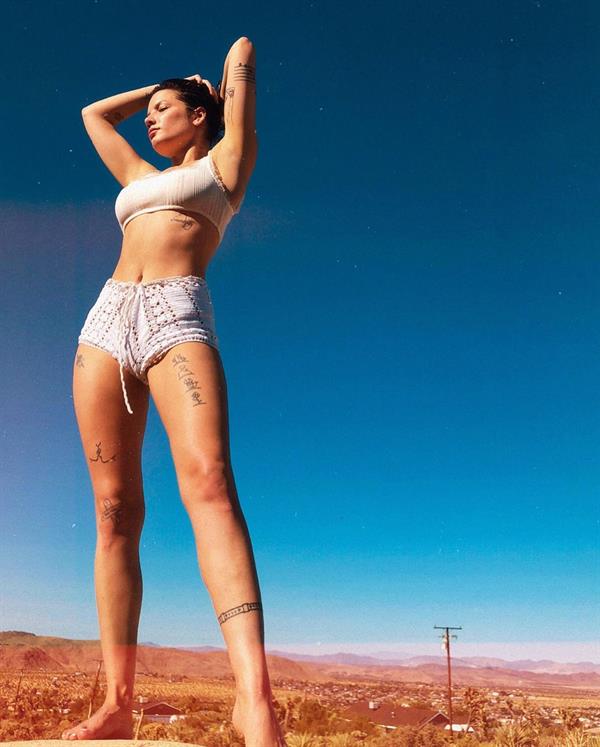
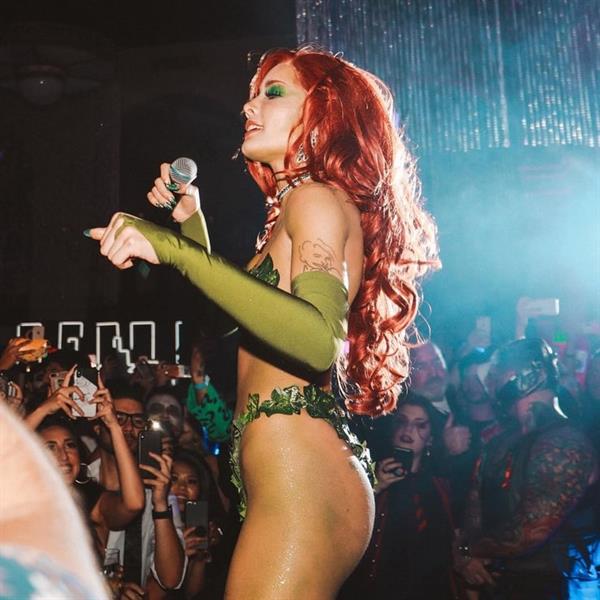
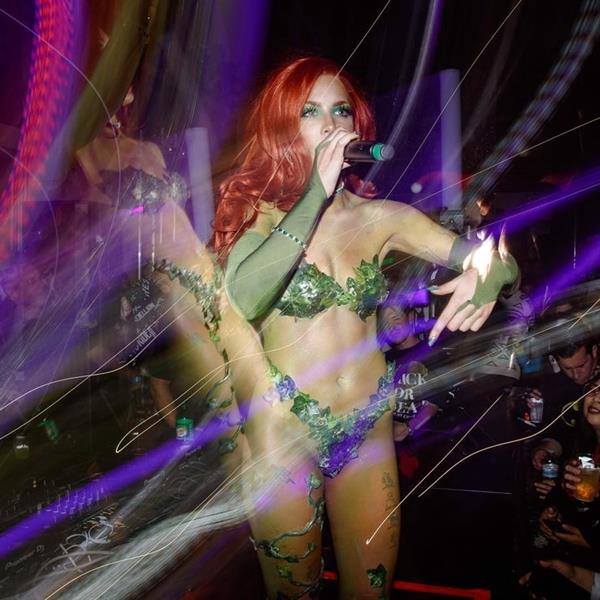
This singer is just beautiful, and we really believe she deserves a spot here. Yup, Halsey will give those wannabe Instagram models a run for their money. Because look at this woman…
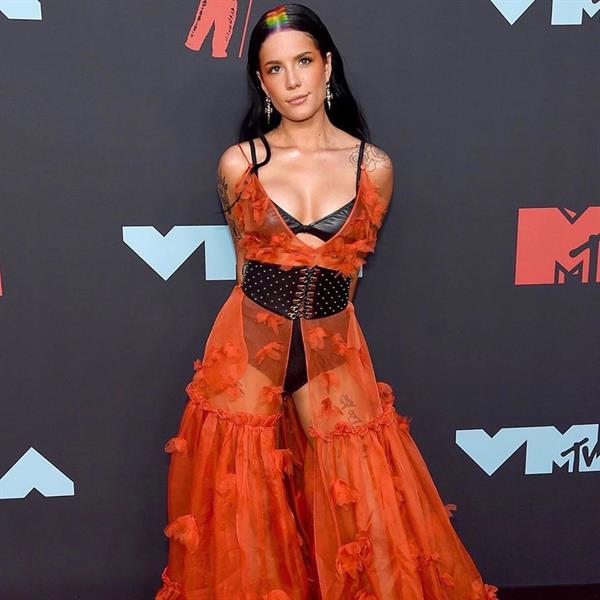
She is gorgeous beyond words, and she is just oozing with sex appeal. Think G.I. Jane. Nope, not just because she can sport a military cut but because she looks like a toughie who can beat you up to submission. Like a big cat. Nope, not a cougar as she is only 30 years old. A snow leopard is what she is. Majestic, stunning, magical, fierce.
Who is Halsey
Halsey is the kind of music artist you recognize the moment they open their mouth—thanks to that unmistakable voice and a knack for lyrics that cut straight to the heart. They broke out in a big way with their 2015 debut album Badlands and then leveled up to global pop dominance with “Closer,” their mega-hit collab with The Chainsmokers in 2016.
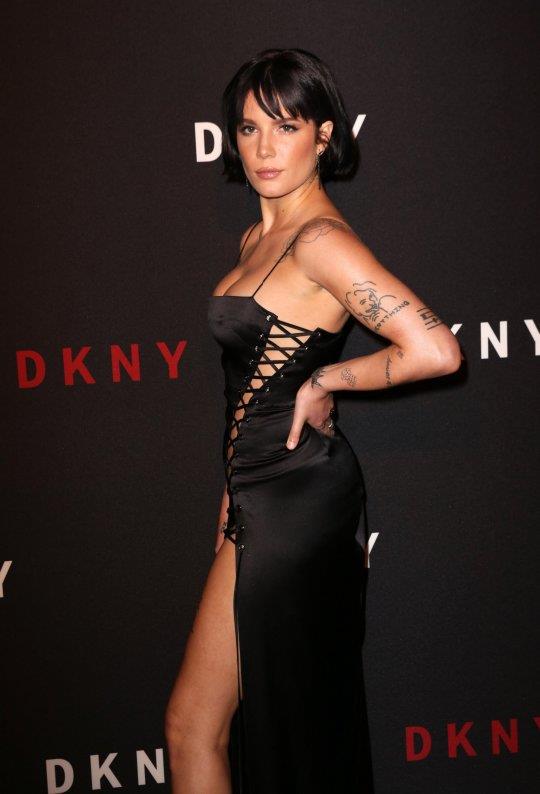
Since then, Halsey’s been racking up the hardware: three Billboard Music Awards, an American Music Award, a Billboard Women in Music Award, plus three Grammy nods. Oh, and in 2020, Time magazine decided they belonged on its list of the 100 most influential people in the world—no big deal.
Beyond the music, Halsey’s also made waves as a passionate activist, speaking out on everything from mental health to racial justice. Basically, they’re not just on your playlist—they’re out there changing the conversation too.
Her Early Life
Halsey entered the world as Ashley Nicolette Frangipane on September 29, 1994, in Edison, New Jersey. Her mom, Nicole, worked as an EMT, while her dad, Chris, managed a car dealership. With Italian and Hungarian roots on her mom’s side and African American (plus a hint of Irish) heritage on her dad’s, Halsey grew up in a richly mixed household with two younger brothers, Sevian and Dante.
Music was in the picture early—she learned violin, viola, and cello before switching to guitar at 14. Her soundtrack growing up included Alanis Morissette, Justin Bieber, and the alt-rock band Brand New. But stability? Not so much. Her family moved constantly, and by the time she hit her teens, she’d already attended six different schools.
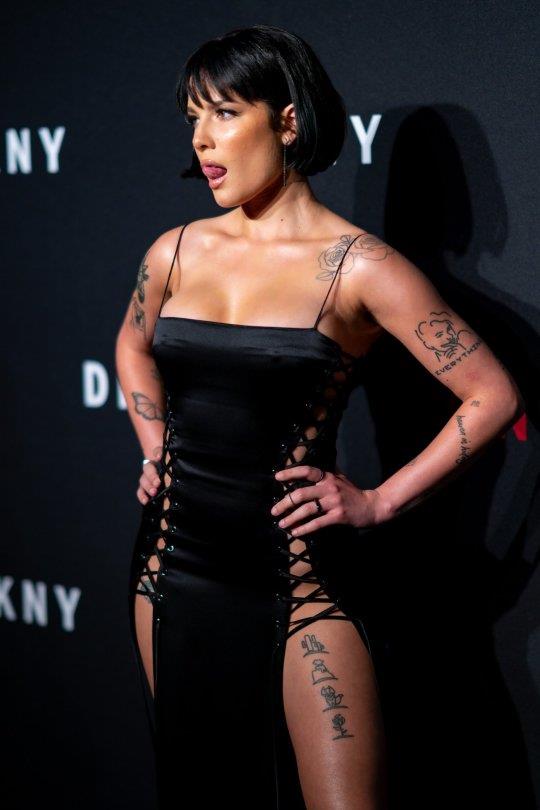
School wasn’t exactly kind either. Halsey was bullied, and after a suicide attempt at 17, she spent nearly three weeks in the hospital. It was then she was diagnosed with bipolar disorder, something she shares with her mom. She described herself as an “unconventional child,” which, in her case, also meant experimenting with drugs and growing up fast. Around this time, she started dating a 24-year-old who lived near Brooklyn’s Halsey Street station—hence, the stage name.
She graduated high school in 2012, tried art school at RISD, but had to leave because of money issues. Community college didn’t stick either. Her parents eventually kicked her out, and she found herself bouncing between a Lower Manhattan basement shared with “degenerate stoners,” the occasional homeless shelter, and her grandma’s house. At one point, she even considered sex work to get by.
It was a rough start, but it’s the kind of grit and chaos that shaped the Halsey the world knows today.
Career Journey
Halsey started writing music at 17, but it wasn’t until 2012 that she really began putting herself out there—posting covers and original snippets on YouTube, Kik, and especially Tumblr, where she went by the moody username se7enteenblack.
Her first taste of viral fame came from a cheeky parody of Taylor Swift’s “I Knew You Were Trouble,” poking fun at Swift’s whirlwind romance with Harry Styles. She even followed it up with another song about their relationship in 2013, because if there’s one thing the internet loves, it’s celebrity drama set to music.
Then, in early 2014, fate (and a house party) stepped in. Halsey met a so-called “music guy” who asked her to collaborate. The result was “Ghost”, a breakup track about her ex. She tossed it up on SoundCloud, and within hours it blew up. Labels started circling, and she eventually signed with Astralwerks, saying they gave her the creative freedom others didn’t.
From there, she hustled hard—playing acoustic shows under different stage names and turning years of poetry into raw, diary-like songs. Writing, she said, became her therapy. In August 2014, she hit the road with The Kooks, and by October she’d dropped her first EP, Room 93, which crept onto the Billboard 200 and snagged No. 3 on the Top Heatseekers chart. Not bad for a debut.
Momentum kept building. By early 2015, she was playing South by Southwest—where she became the most tweeted-about performer of the night—before co-headlining a tour with Young Rising Sons and opening for Imagine Dragons.
Finally, on August 28, 2015, Halsey released her first studio album, Badlands—a moody, cinematic project she described as a dystopian world representing her mental state at the time. Listeners connected in droves. The album went double Platinum in the U.S., cementing her place as more than just an internet success story.
Even before her debut album Badlands dropped, Halsey already had her eyes set on round two. She spent 2016 and 2017 quietly working on her next project, teasing fans along the way. In January 2017, she even slipped out a sultry single, “Not Afraid Anymore,” for the Fifty Shades Darker soundtrack—because of course Halsey belongs on the steamiest soundtrack of the decade.
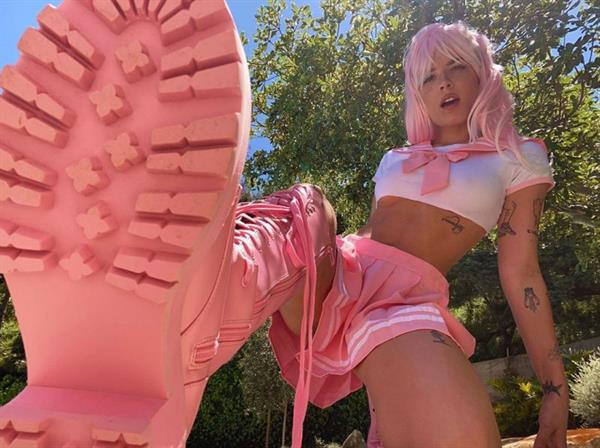
That summer, she released her second album, Hopeless Fountain Kingdom, and soon after leveled up from Astralwerks to the big leagues at Capitol Records. Her first single with the label, “Without Me,” dropped in October 2018 and became a monster hit. And she didn’t stop there—early 2019 was a full-on collaboration spree: a Juice WRLD remix of “Without Me,” the heartbreak anthem “11 Minutes” with Yungblud and Travis Barker, and then “Boy With Luv” with BTS. That last one shattered YouTube records with 74.6 million views in 24 hours, because, well… it’s BTS and Halsey. Internet: conquered.
But Halsey isn’t just about music—she’s got a way with words, too. In June 2020, she announced her first poetry book, I Would Leave Me If I Could, which instantly became a bestseller. That same year, she released her first live album, Badlands (Live from Webster Hall), a nostalgic throwback for fans.
Then came the boldest move yet: her 2021 album If I Can’t Have Love, I Want Power, produced by none other than Trent Reznor and Atticus Ross of Nine Inch Nails fame. Dark, cinematic, and critically adored—it was Halsey at her most fearless.
Of course, she also knows how to keep labels on their toes. In 2022, when Capitol tried to hold back her single “So Good” until it could be tested for TikTok virality (yes, really), Halsey clapped back with—what else?—a viral TikTok. The song was eventually released, proving once again she knows exactly how to play the game.
And in 2024, she came back swinging with “The End,” the lead single from her upcoming fifth album, The Great Impersonator, a deeply personal project tackling her health battles. Trust Halsey to turn pain into art—and drop it with style.
Musical Style and Influences
Growing up, Halsey had a soundtrack that swung from grunge to hip-hop without missing a beat. Her mom was blasting The Cure, Alanis Morissette, and Nirvana, while her dad preferred the swagger of Biggie, Slick Rick, Bone Thugs, and Tupac. The mash-up of angst and flow shaped her musical DNA, and when she later discovered Matty Healy’s raw, offbeat lyricism, it only cemented the fearless, genre-bending style she’s known for today.
Halsey credits Dolores O’Riordan as her major vocal influence, saying “Dolores O’Riordan was a massive influence for me. I grew up listening to the Cranberries with my mother and learned so much about having an unconventional singing voice. Dolores taught me how to use my voice in a manner that was emotive, even if I wasn’t classically skilled… Her voice was beautiful to me. And she was a fierce badass trailblazing woman in the rock landscape… Always an inspiration to me…”
The biggest influence on her live performances is Adam Lazzara, the frontman of Taking Back Sunday; she noted, “One of the most inspiring things I’ve ever seen is watching [Taking Back Sunday] live and watching Adam use that microphone as a prop and I thought yep, I’m gonna do that.”
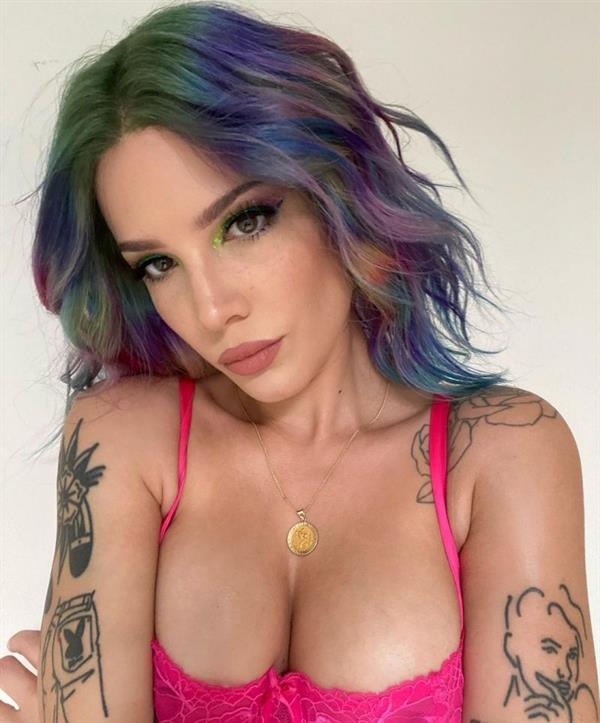
Halsey’s voice is instantly recognizable—an “indie” style that fans either worship or love to debate. She even sings with an accent that doesn’t match her speaking voice, which only adds to the mystique. True to form, her songs are deeply personal, often spinning her life into story-driven lyrics. And when she writes about relationships with women, it’s not just art—it’s her way of putting her bisexuality front and center, no footnotes needed.
People love to slap the “pop” label on Halsey, but she’s never really seen herself that way. She’s always identified as more of an alternative artist—someone who can jump on a pop collab without suddenly being boxed in as a pop star. In fact, she’s pointed out that the only reason she gets categorized that way is because she’s a woman. By 2019, she went full rebel, calling herself “the anti-popstar” and making it clear she doesn’t care what box people put her in—so long as the music actually resonates.
Activism and Philanthropy
Halsey doesn’t just sing about raw, messy truths—she lives them out loud. After surviving a suicide attempt at 17, she threw her voice behind the “I’m Listening” campaign in 2017, a live nationwide broadcast focused on mental health and suicide prevention.
She’s also proudly feminist and unapologetically political. After the 2017 Women’s March, she pledged $1 to Planned Parenthood for every retweet—Twitter came through, and she cut a check for $100,000. A year later, she stood before more than 200,000 protesters at the Women’s March and traded a speech for a gut-punch of a poem, A Story Like Mine, where she shared her own experiences of assault and violence.
Her activism didn’t stop there. She showed up at March for Our Lives to demand gun reform, dragged Ivanka Trump on Twitter for her tone-deaf posts, and even called out Victoria’s Secret after performing at their fashion show, blasting the brand’s lack of inclusivity for trans models.
Climate change? She sang on the 2019 all-star charity single “Earth.” Racial justice? She was on the frontlines of the George Floyd protests in L.A. with then-boyfriend Yungblud. And when it came to lasting impact, she launched The Black Creators Fund in 2020, offering financial support and platforms to Black artists.
In short: Halsey doesn’t just make headlines for her music—she makes them for standing up, speaking out, and refusing to stay quiet.
Facts and Trivia
Halsey has always been open about who she is and who she loves. She’s proudly bisexual—long before fame ever came calling, she was dating women—and in 2021 she let fans know she uses both she/her and they/them pronouns.
Her dating history reads like a playlist of the music world (and a couple of Hollywood cameos). She was once smitten with The 1975’s Matty Healy—she even credits him with inspiring her early songwriting. Then came Norwegian producer Lido, who not only helped create Badlands but also fueled the concept behind Hopeless Fountain Kingdom. In 2017, she fell hard (and fast) for rapper G-Eazy; their love anthem “Him & I” played like a modern-day Bonnie-and-Clyde ballad, but by late 2018 the romance had fizzled—and “Without Me” was her mic-drop on the breakup.
Afterward, she was linked to Yungblud (all the way until fall 2019) and then actor Evan Peters, who briefly stepped into her love story from late 2019 to early 2020.
By 2021, her focus shifted: she welcomed her son with Turkish-American screenwriter Alev Aydin. Though the relationship didn’t last, the two settled into co-parenting—custody agreements and all—with Halsey making sure her little boy could still tag along on tour.
Love, however, wasn’t off the table. In 2023, sparks flew with Canadian actor Avan Jogia, and by September 2024, Halsey was happily flashing a brand-new engagement ring.
Halsey has never shied away from talking about her health—mental or physical. Back in 2015, she even summed herself up as “just this fucked up stoner kid who made it,” which, honestly, might be the most Halsey thing ever.
At 17, she was diagnosed with bipolar disorder, a condition her mother also lives with. That diagnosis came after a suicide attempt and a 17-day stay in a psychiatric hospital—an incredibly heavy chapter that, not long after, gave way to her breakthrough in music. She’s said that performing helps her cope, and she’s come to see being bipolar not only as part of her story but also as something that makes her “really empathetic.” In 2021, she also revealed that she’d been diagnosed with ADHD back in high school—she thought she’d “grown out of it,” but during the pandemic, she revisited treatment and now takes medication.
On top of that, Halsey has battled endometriosis. She went public with her diagnosis in 2016 after a miscarriage the year before, which she initially blamed on her brutal touring schedule. In reality, it was tied to her condition. In true “show must go on” fashion, she once performed on stage just hours after realizing she was miscarrying—terrifying, heartbreaking, and yet a window into the pressure she felt not to miss a beat in her career.
Since then, she’s spoken out often about endometriosis, from sitting down on The Doctors to talk about freezing her eggs, to addressing the pain publicly at the Endometriosis Foundation of America’s Blossom Ball in 2018.
Her Body Measurements
Halsey stands 5 feet, 4 inches and she rocks a 34-25-35 (32B bra size) figure.
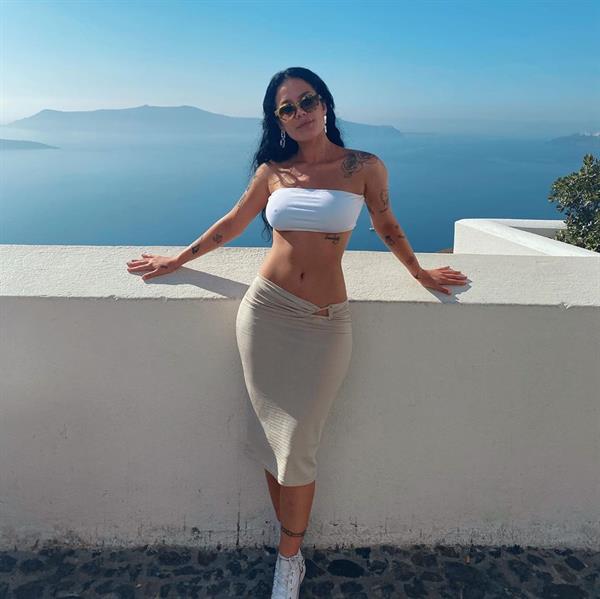
Halsey Photos
Join her over 30 million followers on Instagram for the latest about her personal life.
And do check out our Halsey page for more of her stunning pictures and poses.