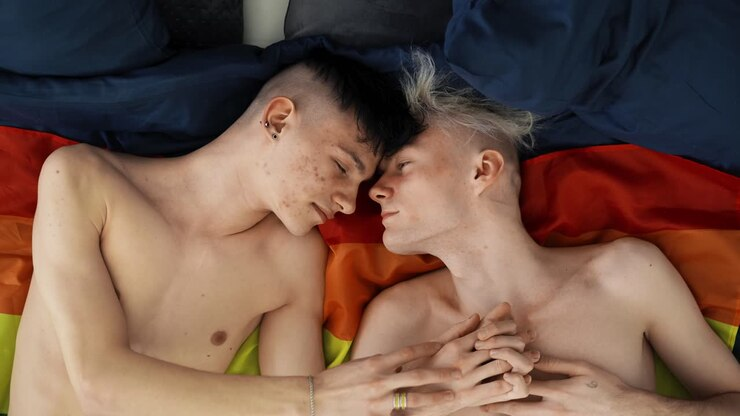
Many people are aware of the difference when they see it. Most people can tell whether what they’re watching has been created specifically for th em versus if they have simply found something that they like.
Characters may be visually pleasing with quality lighting, a well-made set, etc., and yet there is still an “oddness” about the scene. Characters’ facial expressions, their personalities, or their backgrounds (in this case) do not relate to your own imaginative ideas.
So you keep browsing.
You move through categories, open new tabs, and search for a better match. Sometimes you find it. Other times, you settle for something close enough.
That has been the usual experience for years. Viewers could choose from a large amount of content, but they had almost no influence over how it was made.
AI is beginning to give people another option.
Instead of only looking for a fantasy that already exists, users can start with a character, setting, or mood of their own.
Attraction Is More Than a Body Type
Adult websites often organize content through simple categories.
Age range. Build. Hair colour. Clothing. Location. Style.
These labels are useful because they help people narrow down thousands of options. The problem is that attraction is rarely based on one label.
Someone may prefer a broad, muscular character, but also want him to appear calm and approachable rather than aggressive. Another person may imagine an older man with a rugged look in a quiet, romantic setting.
The same character can feel completely different depending on the details around him.
A confident expression creates one mood.
A shy smile creates another.
Place the character in a busy nightclub and the scene feels energetic. Move him to a softly lit apartment, and the entire atmosphere changes.
These choices are difficult to capture through a normal search bar.
Personal creation allows users to combine them.
Ideas Often Begin With One Small Detail
People sometimes assume they need a complete scene in mind before they can use an ai gay porn platform.
In reality, most creative ideas begin with something small.
It might be a face.
A particular outfit.
A location.
A feeling.
Maybe you imagine two fictional men sitting together on a balcony after dark. You can see the city lights behind them, but you have not decided what either character should look like.
That is still enough to begin.
The first image may help you answer the questions you had not considered.
One character may look too formal. The lighting may feel cold. The balcony may appear too large and empty.
You make a few changes.
You choose warmer lighting. You move the characters closer together. You replace the formal clothes with something more relaxed.
The scene begins to feel less like a random picture and more like a moment between two people.
Chemistry Comes From the Small Things
Two likable characters don’t always make for a compelling picture.
Chemistry usually comes down to little things that you easily miss.
How closely are the actors standing?
Are they gazing into each other’s eyes or glancing elsewhere?
Do their facial expressions appear genuine?
Is there one actor who appears completely relaxed while the other looks awkward?
Changing just how the actors stand around each other can completely alter the tone of your shot.
Take two guys in a kitchen late at night.
One set of images shows them both staring directly at the camera with a very serious expression. It may be polished-looking, but it has a “staged” quality to it.
Another set of images shows one guy leaning against a counter while smiling up at the other guy. There’s a glass of liquid sitting nearby (it’s been poured and partially consumed), the lights are low except for a single light overhead over the stove.
This second series of images implies something was going on when this image was taken; it sparks our curiosity as to these individuals.
Curiosity, which is usually caused by a sense of story, is what generally makes a shot memorable.
Original Characters Can Develop Their Own Identity
Creating a fictional character does not have to end after one image.
A simple idea can gradually become more detailed.
You may begin with a general description, such as a tall man with dark hair and a confident personality. After several generations, certain details start to feel right.
Perhaps he always wears darker colours.
Maybe he suits urban settings better than fantasy scenes.
A particular hairstyle or expression may become part of his identity.
The character begins to feel consistent because you are making repeated choices about him.
Some users may create a second character who feels completely different. He might be softer, more playful, or more reserved.
The contrast between the two can lead to new scene ideas.
At that point, the process moves beyond generating isolated images. It starts to feel like building a small fictional world.
Representation Does Not Need to Follow the Same Formula
Gay adult content has become more varied, but familiar patterns still appear again and again.
The same body types are often shown.
The same personalities are repeated.
The same relationship dynamics appear because they are easy for audiences to recognise.
There is nothing wrong with enjoying those familiar ideas. The issue is that they do not represent everyone.
Some viewers may prefer to see men in adult content as being older, softer, heavier, more feminine, less polished than most male center figures in adult content.
Other consumers may find that they value an emotional relationship with a performer over physical characteristics or even humor/personality in addition to having some sort of sexual attraction to the performer.
With AI, users can be given an opportunity to look for these types of performers without needing to wait for a producer or artist to determine that there is a strong demand for their type of performer.
The result does not need to represent every gay man.
It only needs to reflect the idea of the person creating it.
Fiction Should Not Come at Someone Else’s Expense
Adult AI tools also come with an important responsibility.
There is a clear difference between creating an original fictional adult and using technology to imitate a real person without permission.
A celebrity, former partner, friend, coworker, or stranger should not be turned into adult content simply because the technology makes it possible.
Consent still matters.
Keeping the characters fictional avoids that harm and gives creators more freedom at the same time.
There is no need to create a duplicate of a real person, because you can create someone entirely new. A fictional character has all the components of a real person’s original look, personality and history as well as a unique setting. This new person can be from a world that exists only within the image. That isn’t a creative limitation, it’s a call for creation. The best tools are easy to understand. Most people don’t want to learn how to use complicated technical terms prior to creating their very first image.
That is not a creative limitation.
It is an invitation to make something new.
The Best Tools Feel Easy to Understand
Most people are not interested in learning complicated technical language before creating their first image.
They want the process to feel clear.
Describe the character.
Choose a style.
Generate the image.
Change what does not work.
A dedicated ai gay porn platform may feel more straightforward than a general image generator because gay male characters and adult themes are already part of the intended experience.
Users do not have to force their ideas into a tool designed for a completely different audience.
A useful platform should still give people enough control to adjust the details that matter.
That may include body type, appearance, visual style, setting, expression, lighting, and the number of characters in a scene.
Privacy also matters.
Adult interests are personal, even when every character is fictional. Users should be able to understand how their creations are handled and whether anything they make is visible to other people.
Trust is often built through simple things: clear controls, understandable settings, and no unpleasant surprises.
AI Creation and Traditional Content Can Coexist
AI-generated images do not need to replace photography, illustration, video, or animation.
Those formats offer something different.
Traditional adult content gives viewers a complete experience shaped by someone else. The performers, photographers, directors, and artists choose how the scene looks and where it goes.
That can be part of the appeal.
You may discover a character, setting, or idea you would never have imagined yourself.
AI creation starts from the opposite direction.
You already have the first piece of the idea and want to see what it could become.
Some days, browsing is exactly what you want.
Other days, you may have a scene in mind that no category seems to capture.
Both experiences have a place.
Final Thoughts
Gay adult fantasy has never been as simple as choosing a body type or opening the right category.
The details matter.
The character’s expression matters.
The setting matters.
The way two people appear to relate to each other matters.
AI gives users more control over those choices.
A scene can begin with one small idea and develop through a series of changes. The first result may be wrong in several ways, but it gives you something to work with.
You adjust the lighting.
You change your clothes.
You soften an expression.
You move the characters closer together.
Eventually, the image starts to feel less like something you found and more like something you helped shape.
For people who have spent years browsing other people’s ideas, that can be a very different kind of experience.
Sometimes we want to discover a fantasy.
Sometimes we want to create one.